A Rainy-Day Screen-Free Hour That Fits Your Routine
A rainy-day screen-free hour gives you a simple indoor pause, with an easy activity and a clear return point so viewing can resume without a scramble.
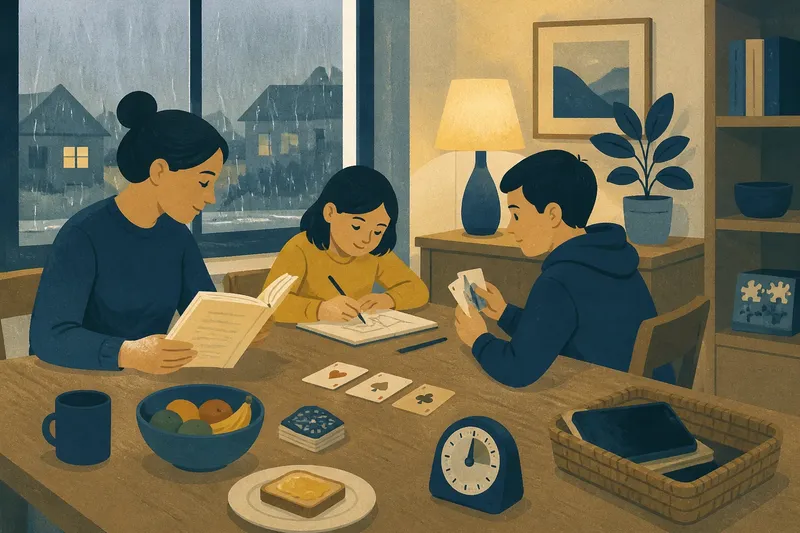
The common mistake with a rainy-day screen-free hour is deciding to “switch everything off” without choosing what will fill the space. The result is often a restless wander back to the television or phone, with the hour feeling like a test rather than a pleasant change of pace. A small plan works better: pick one indoor activity, make the screen pause clear, and decide in advance what happens when the hour ends.
Choose a workable hour
Choose a time that already has a natural boundary. An hour before dinner, after lunch, or between a programme and the evening routine is easier to hold than an arbitrary stretch that interrupts work or leaves someone waiting for a screen they need. If other people share the room, agree on the timing together.
“Screen-free” can mean different things in different homes. You might set aside the television and personal devices while leaving a phone available for an urgent call. Or you might keep a screen on for a household task but avoid recreational viewing. State the boundary plainly, so nobody has to guess whether checking a message or changing a playlist counts.
Use a clock, kitchen timer, or a simple time agreed aloud. Put devices where they are easy to retrieve later but not in the middle of the activity. The point is not to create a penalty for looking; it is to make the pause visible enough that you can settle into something else.
Pick an easy activity
Choose something that can begin with the materials already at hand and stop without a complicated clean-up. A rainy hour does not need a craft project with several stages or an ambitious household job. It should feel complete enough to hold your attention, while remaining flexible if someone gets tired or a meal needs attention.
- Read together: pick a short story, a few pages of a book, or a magazine. Take turns reading if that suits the group.
- Make something simple: fold paper, draw with pencils, sort photographs, or mend a loose button. Put out only the supplies you expect to use.
- Play a tabletop game: choose cards, dominoes, a jigsaw, or a familiar board game that fits the time available.
- Prepare a snack: wash fruit, make toast, or assemble a simple plate. Keep the task within ordinary kitchen routines and let the person responsible for cooking decide what is appropriate.
- Listen without watching: put on a radio programme, music, or an audiobook and pair it with a quiet task such as sketching or sorting a drawer.
Make the choice before the hour begins, but keep a backup in mind. If the first activity turns out to be a poor fit, switching to another prepared option is more useful than treating the plan as a rule that must be endured.
Set up the room
A few small changes can help the activity feel distinct from ordinary viewing. Clear a patch of table, bring chairs closer, or move a lamp so the page or game is comfortable to see. Put a pencil, cards, or reading material within reach. Avoid laying out every possible option; too much choice can become its own distraction.
For a shared hour, give everyone a role in the selection. One person might choose the game while another sets out the pieces. If people want different things, a quiet shared space can hold separate activities: one person reads while another draws. The aim is a screen pause, not compulsory group entertainment.
Say you have a television programme scheduled after dinner and a rainy afternoon before it. You choose a card game, set it on the dining table, and agree that the hour ends when the kitchen timer rings. If the game runs long, you can pause it at a round boundary, put the cards away, and return to the planned viewing without debating whether the hour has stretched indefinitely.
What if plans change?
What if someone needs a device?
Keep a practical exception for necessities, such as an urgent call or a task that genuinely depends on a screen. Handle that need without turning it into a dispute about the whole hour, then return to the activity if there is still time.
What if the activity feels dull?
Change activities rather than waiting for enjoyment to appear. A short walk around the room, a different book, or a simple puzzle may fit better, provided the weather and household needs allow it.
What if someone wants to stop early?
Let the person stop, and offer a quieter alternative such as reading or listening to music. The hour is a flexible routine, not a demand that everyone remain occupied in the same way.
What if the timer rings mid-game?
Agree on a natural stopping point before starting, such as the end of a round or a page. If the activity cannot pause neatly, make a brief decision together about whether to finish that part or leave it ready for another time.
Plan the return
The return to viewing is part of the plan, not a reward that has to be earned. Before the hour begins, decide what will happen next: perhaps the television stays off until a scheduled programme, or perhaps a family member chooses one item to watch. A clear next point prevents the end of the pause from becoming an open-ended search through menus and apps.
Make the transition small. Put away the cards, leave the book on the table, or rinse the snack plates. Then use the remote or device as usual, rather than adding a second rule about how viewing must feel. If you want to choose something together, name the options that fit the moment instead of scrolling without a purpose.
For a household that shares devices, the return point should also make room for practical needs. Someone may need a laptop for a lesson or a phone for a message. Keep that separate from the choice to resume entertainment, so one necessary screen use does not quietly erase the boundary for everyone.
Keep the routine light
Afterwards, notice one useful detail: which activity began easily, where people preferred to sit, or whether the chosen hour fitted the rest of the day. You do not need to keep a record. Use that observation to make the next rainy-day pause simpler, perhaps by leaving a jigsaw on a shelf or keeping a deck of cards in the dining room.
If the hour is not comfortable, adjust its length or timing next time. A shorter pause that suits the household is more likely to be repeated than a rigid plan that collides with meals, work, rest, or a programme people were looking forward to. The rainy-day screen-free hour works best when it offers a real alternative and an easy route back to viewing.
Keep one activity ready and decide the return point before switching off. That small bit of preparation can turn a wet afternoon into a welcome change of rhythm, without making screens the enemy or the pause another task to manage.